
Corporate Information
Service Information
This section provides information about actual or expected delays of 5 minutes or more for train services.
Corporate Information
Service Information
This section provides information about actual or expected delays of 5 minutes or more for train services.
We will realize growth and create further value by using our stock listing as an opportunity to drive growth
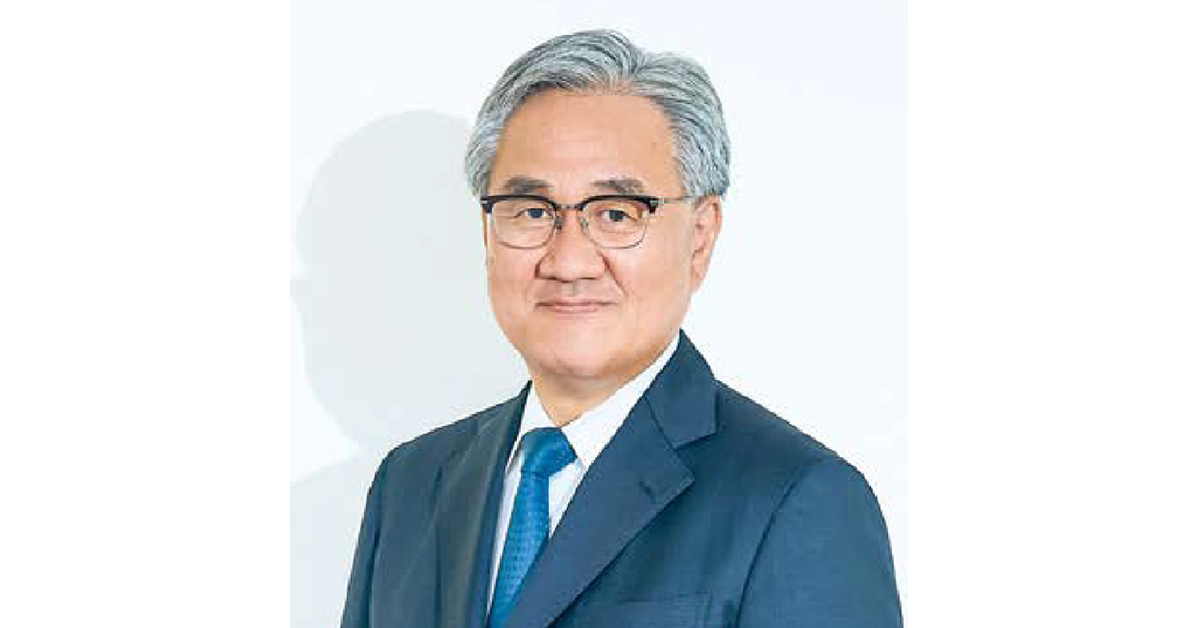
I became Tokyo Metro's president in June 2025.
In 1986, I joined the company's predecessor, the Teito Rapid Transit Authority (TRTA), as a civil engineer. Over the next 16 years, I was involved in new line construction projects at the New Line Construction Bureau. Subsequently, I worked on business management and stock market listing in general management departments. During these years, I came to realize that projects cannot be completed by a single organization alone. This appreciation of the importance of collaboration stemmed from the experience of advancing projects in partnership with government agencies and local communities while maintaining close communication with numerous stakeholders.
Similarly, in-house operations cannot proceed effectively unless frontline and head office operations communicate well with each other. We can discuss our ideal scenarios but results cannot be achieved without the cooperation of the relevant stakeholders. The importance of fostering dialogue and collaboration while moving forward is a fundamental belief of mine that remains unchanged to this day. In conducting business management, I intend to maintain effective communication not only with our employees but also with our other stakeholders.
Now that we have entered the postCOVID-19 pandemic era in earnest, my mission is to achieve growth. Since the 2010s, Tokyo Metro Group has been promoting barrier-free accessibility as part of a long-term plan. The entire Group has been working hard to implement the plan ahead of schedule and fulfill its social responsibilities. Having decided on capital investment that significantly exceeded depreciation expenses, we were rapidly advancing infrastructure improvements when the unprecedented COVID-19 pandemic began in 2020. As a result of the pandemic, the number of railway passengers decreased significantly, and the Tokyo Metro Group was left with no choice but to change direction and curb investment.
Although we recorded a net loss in FY2021/3 and FY2022/3, we achieved a turnaround in performance and realized a net income in FY2023/3 thanks to the efforts of each one of our employees. In FY2025/3, Tokyo Metro listed on the Tokyo Stock Exchange Prime Market and began moving into a new phase. We are now at a critical juncture where we must look beyond recovery and shift to an offensive strategy. The Tokyo Metro Group must truly realize the growth that was hindered by the COVID-19 pandemic. I will therefore conduct corporate management with a resolve to fulfill this responsibility
On October 23, 2024, Tokyo Metro was listed on the Tokyo Stock Exchange Prime Market. The backdrop to the stock listing is a major trend toward the privatization of special corporations by the government. Specifically, the Act on Tokyo Metro Co., Ltd. stipulated that the national government and the Tokyo Metropolitan Government must promptly dispose of their shares of the company. In accordance with the aforementioned trend, for many years we worked with a view to a stock listing until our efforts finally bore fruit.
One reason companies list their stock is to diversify their sources of funding. In other words, they seek to change their financial position. However, the company has a track record of issuing corporate bonds (the former Teito Rapid Transit Authority bonds) that stretches back to the TRTA era. This bond issuance enabled us to stably procure funds from the market. Therefore, the decision to list was not driven by our financial position. In that case, what was the significance of the stock listing for the company? The purpose was to add general shareholders as new stakeholders. Going forward, the company will be expected to conduct business management that incorporates the viewpoints of shareholders focused on returns, that demonstrates creativity to enhance management autonomy and flexibility, and that expedites decision-making. In addition, strictly disciplined business management that emphasizes capital efficiency is essential. Further, many institutional investors place importance on the governance of the companies they invest in. The company has already established a governance structure and is fully compliant with the Tokyo Stock Exchange's Corporate Governance Code. Nonetheless, the company will enhance governance even further.
Meanwhile, some employees have expressed concern that the stock listing could change our focus on safety or the level of our services. Although the composition of our stakeholders has partiall changed, the people our employees interact with on a daily basis remain the same: customers, communities and society, and suppliers. Our "Unremitting pursuit of safety" and "Provision of high-quality, customer-oriented services" have not changed. Rather, we believe that such day-to-day operations are the foundation that supports the trust placed in us as a listed company. Also, the Group has a family-like atmosphere. At times, employees stay overnight at their workplaces. In the course of spending long periods together, personnel naturally develop a strong sense of teamwork. Going forward, I wish to continue cherishing this warm, cooperative workplace atmosphere and culture.
In formulating the Mid-Term Management Plan, which began in FY2026/3 and was the company's first such plan since the stock listing, Tokyo Metro aimed to achieve sustained growth.
Our Spirit clearly sets forth Our Resolution, which comprises the "Unremitting pursuit of safety" and the "Provision of high-quality, customer-oriented services," and Our Credo, which consists of Autonomy, Challenge, and Collaboration. Our Value is based on the belief that addressing our key sustainability issues (materiality) will lead to the creation of value. Our Vision features two key words: Create the Next "Normal" and the Next "Exciting." During the formulation process, we discussed whether "Normal" was an appropriate word to include in the Vision, but I place great importance on the meaning of this word. For example, trains arriving, being boarded by passengers, and arriving at their destinations on schedule are considered "Normal." Maintaining this normality, however, requires a great deal of extraordinary effort on the part of those working in frontline operations. For example, if there is a major earthquake, personnel from technical departments walk along the tracks to confirm safety before the resumption of operations. When the Great East Japan Earthquake occurred in 2011, we operated trains throughout the night and resumed normal operations on all lines the following morning. At the time, some customers were surprised and grateful, commenting that they had previously thought the operation of trains was something "Normal" that happened as a matter of course but they now realized that this was not the case. Such comments boosted our employees' morale and demonstrated to us that day-to-day safety and reassurance are supported by a commitment to maintaining "Normal" operations.
Moreover, "Normal" has always evolved. Previously, cell phones could not connect to mobile networks when in tunnels but thanks to collaboration with telecommunications carriers, connection is now possible. Today this is "Normal," but in the past it was not. Similarly, platform doors, which prevent falls onto the tracks or contact with trains, are becoming "Normal." By the end of FY2026/3, we expect to have installed them at all stations, except for the Nishifunabashi-bound platform of the Tozai Line's Minami-sunamachi Station, which is undergoing major renovation work. We will continue efforts to realize further evolution of the "Normal" in the future.
Our other key word is "Exciting," which reflects our desire to change the image of the subway. Aiming to create a subway that people want to use for outings, we will develop places in areas along railway lines that people want to visit on their days off. In this way, we will heighten the appeal of all areas along our railway lines. We also aim to increase the value of areas along railway lines by partnering with companies, real estate developers, and stores in the areas. These initiatives will increase the number of people who visit Tokyo for the Next "Exciting" experience.
Under the previous Mid-Term Management Plan, the Tokyo Metro Plan 2024, which set out Structural Reform and New Breakthroughs as our Basic Policy, we achieved all management targets based on management indicators. This can be viewed as a significant achievement. But at the same time, since the plan was formulated during the uncertainty of the COVID-19 pandemic, we set targets that were slightly conservative. In the second year of the plan, we upwardly revised our management targets. Even so, we are still not fully satisfied with our performance. Given the events of the past several years, we want to shift to a strategy that is clearly focused on a growth trajectory.
The Railway Business is the foundation of the Group and its greatest strength. However, the steep decrease in railway usage resulting from an external factor, namely the COVID-19 pandemic, made us keenly aware that having few revenue sources other than railways is a vulnerability. In fact, railway operators whose real estate businesses account for significant percentages of their portfolios were able to mitigate the impact of the pandemic on their overall performance. This experience convinced us that we need another mainstay besides railways.
During the previous management plan, we also came to realize that no aspect of our services is sacred. We had the fixed idea that, in the interests of preserving customer convenience, reducing current services was not an option. Upon reviewing selected services, however, we discovered that, due to changing lifestyle patterns, some services were rarely used or were not especially valued by customers. The realization that services can be flexibly revised based on actual usage patterns was an important insight gained from this process.
In this way, we gained many insights and lessons while implementing the previous Mid-Term Management Plan. In terms of envisioning our medium- to long-term growth, the three-year period was extremely meaningful.
While focusing on the Transportation Business, we are also enhancing the appeal of the city through the Urban Design and Lifestyle Creation Business. As part of this business, the Real Estate Business generates significant synergies with railways. By developing real estate next to highly convenient station spaces, the business extends the value of stations beyond their immediate vicinity to encompass entire areas. We do not need to undertake all such development on our own. Collaboration with real estate developers, local communities, and government agencies to heighten the Tokyo Area's overall appeal will ultimately enhance our corporate value. Many real estate developers focus on real estate adjacent to stations because they expect the value of such assets to increase. This also benefits railway operators because the generation of flows of people boosts passenger numbers. Thus, a mutually beneficial cycle is created for both parties. Meanwhile, the Consumer and Corporate Services Business—which is the other pillar of the Urban Design and Lifestyle Creation Business alongside the Real Estate Business—utilizes spaces in stations and under elevated railway tracks to further heighten the appeal of stations and towns.
Under our recently formulated Mid-Term Management Plan, Run! Soar Beyond the Next Generation, we will transition into a Message from the President We will realize synergies between the Transportation Business and the Urban Design and Lifestyle Creation Business to double profits from non-transportation businesses over the coming 10 years. 06 Data 01 Commitment 02 Value Creation 03 Strategies 04 Sustainability 05 Corporate Governance Tokyo Metro Group Integrated Report 2025 15 phase of full-fledged growth. The title of the plan uses the kanji character that includes the meanings "run fast" and "soar" rather than the standard kanji character for "run" to express our aim of continuing to run so hard that we accelerate, eventually rise up, ascend, and grow even further.
The key to achieving growth is to take maximum advantage of the Tokyo Metro Group's strengths. Our railway network covering the 23 wards of Tokyo is a unique and significant strength. This network is an asset that, since the opening of a subway line between Asakusa and Ueno in 1927, has been built up over many years through the efforts of our predecessors, the cooperation of the government and many other stakeholders, and support from various subsidies. We should recognize that this asset has been entrusted to us and that we have a responsibility to maximize its value and pass it down to the coming generation. Another significant asset is the Group's large number of personnel with advanced technical expertise in a wide range of fields, including railway operations and maintenance. By utilizing the expertise, technologies, and human resources we have developed over the years, we will advance initiatives both in Japan and overseas.
The nighttime population of Tokyo's 23 wards, which forms the foundation of the Group's business, is projected to continue growing until 2045. In the five central wards, the total office floor area is rising every year, but the office vacancy rate is decreasing. This trend shows that more people are in the city center during the day. In addition, demand from visitors to Japan is growing steadily. Thus, conditions are favorable for the Group. On the other hand, the number of customers using commuter passes remains at approximately 80% of pre-COVID-19 levels. Going forward, we will focus on initiatives that encourage more non-commuter pass customers to use our trains for visits to the city center.
With the recent increased severity of natural disasters Tokyo Metro is continuing to implement earthquake resistance and flood prevention measures. It is also essential to bolster security in readiness for risks such as crime and terrorism. Currently, security cameras are installed in stations and trains. Going forward, however, we will upgrade our cameras to enable real-time monitoring in all trains, establishing a system that expedites responses during emergencies. As for barrierfree accessibility, we plan to install platform doors at all Tokyo Metro stations by FY2026/3 (excluding the Nishi-funabashi-bound platform of the Tozai Line's Minami-sunamachi Station, which is undergoing major renovation work). In addition, we are nearing the completion at all stations of at least one elevator route for transporting passengers from the platform to ground level. Our other current initiatives include transportation improvements to reduce congestion on the Tozai Line and the introduction to all lines of a new Communications-Based Train Control (CBTC) signal system, which is highly effective in recovering from delays and has already been introduced on the Marunouchi Line.
At present, construction of extensions to the Yurakucho and Namboku lines is underway. In the long term, these extension projects are business opportunities that will accelerate our growth. The lines will not generate revenues until their scheduled openings in the mid-2030s. Therefore, after careful deliberation on whether to proceed with the project, we decided to adopt a scheme in which public funding is used for the entire development. This is an extremely strategic approach that minimizes risk while creating future value. At this point, we have no other plans for new line construction projects in which we are the main developer.
We are transitioning from conventional Time-Based Maintenance (TBM) to Condition-Based Maintenance (CBM). TBM entails the periodic replacement and maintenance of equipment, while CBM involves conducting maintenance based on the actual condition of equipment. The latter method allows for more flexible and appropriate replacement and maintenance of equipment, reducing unnecessary work and costs. In introducing CBM, the establishment of systems that can monitor the condition of equipment in real time is critical. These systems immediately detect abnormalities, improve safety, and heighten the efficiency of maintenance operations. The introduction of CBM to infrastructure such as tracks, electrical equipment, and tunnels will enable condition assessments without on-site visits, thereby enhancing labor productivity.
We are also examining the phased introduction of automated train operation. Grade of Automation (GOA) 4 trains are equivalent to Level 5 autonomous vehicles, allow us to achieve driverless operation, and do not require any train crew members. However, given that emergency measures sometimes need to be taken on railways, challenges remain with respect to achieving fully automated train operation. Accordingly, we are currently conducting research into introducing a GOA 2.5 system on the Marunouchi Line. Under the system, train operation is fully automated, with humans only intervening if obstacles are detected or other emergencies occur. We are also developing technologies to create a system in which a crew member does not need to be stationed in the cab but can patrol the train and respond to situations as required
In the Real Estate Business, which properties are purchased is extremely important. Locations cannot be selected indiscriminately. Until now, the Group has emphasized synergies with the Railway Business and focused on developing properties directly connected to stations. The capabilities of the Real Estate Business have been increasing steadily. We are now considering extending the scope of our real estate activities to include areas within walking distance of stations.
The Group's Real Estate Business has traditionally centered on a "landlord" model, whereby revenues are generated from owned assets. However, we will shift to a model in which we use our expertise to generate revenues. Our strategy is to diversify revenue streams by not only owning real estate but also handling leasing to tenants and facility management in-house and even directly utilizing our real estate to operate our own businesses. Further, in 2024 we launched a private real estate investment trust (REIT), Tokyo Metro Private REIT, Inc. We have already sold properties worth approximately ¥20 billion to this company. We are using the resulting funds to acquire and develop new properties. By leveraging this asset-circulating system, the Real Estate Business will be able to achieve continuous growth through self-sustaining capital circulation.
To ensure consistent return on investment, discernment in selecting land and properties is ultimately the key. There are concerns that the recent surge in land prices Message from the President 06 Data 01 Commitment 02 Value Creation 03 Strategies 04 Sustainability 05 Corporate Governance Tokyo Metro Group Integrated Report 2025 17 Message from the President could make it difficult to realize yields. However, the company has established clear investment criteria and concentrates solely on projects that meet them. By strictly adhering to the principle of only pursuing projects that meet our criteria, we aim to manage risks appropriately and stably secure high levels of profitability.
Tokyo Metro places great importance on shareholder returns and will continue endeavoring to enhance them. Specifically, we aim to achieve a consolidated dividend payout ratio of 40% or more and pursue a policy of continuously providing stable returns. To enhance the stability of dividends even further, the new Mid-Term Management Plan not only introduces a consolidated dividend payout ratio based on annual income but also adopts a dividend on equity (DOE) ratio as a new indicator. Of course, we will also actively seek the growth investments needed for future value creation. Rather than allocating all profits to shareholder returns, our goal is to meet shareholder expectations by balancing growth investments and shareholder returns.
As a company responsible for public transportation infrastructure, we believe that promoting sustainability is an extremely important management task. We will remain committed to sustainability as we continue advancing initiatives. In terms of the environment, we have revised our FY2031/3 CO2 emissions reduction target from 50% to 53% compared with FY2014/3 emissions. We are also focusing on promoting diversity, equity, and inclusion (DE&I) and respect for human rights. In particular, increasing the percentage of female personnel at field offices and sites is a long-standing task. We will continue reforming workstyles and workplace environments with the aim of becoming a company where more people want to work. Such sustainability initiatives and the achievement of growth are underpinned by the competence and efforts of our personnel. The Tokyo Metro Group has many dedicated employees who have a strong sense of mission. I have encountered many employees who embody these qualities. Witnessing their painstaking efforts to satisfy diverse customer requests and to ensure trains run reliably every morning, I have come to appreciate how strong their sense of mission and commitment to work is.
Although the attributes of the personnel sought by the Transportation Business and the Urban Design and Lifestyle Creation Business differ, both businesses require flexible thinking and a willingness to take on challenges. This mindset should not be limited to an appetite for taking on major initiatives. Even initiatives that make small changes in daily operations can lead to significant growth over time. For this reason, we will foster a culture that encourages employees to be curious and to tackle new initiatives. We will strengthen our organizational capabilities by utilizing the aptitudes of personnel as well as advancing training and recruitment efforts.
In line with our Mission of "Keeping Tokyo on the Move," we aim to contribute to the active lives of all people who gather in Tokyo. To this end, as a company that plays a central role in Tokyo's railway network, we promise to continue taking on ambitious initiatives aimed at ensuring safety and enhancing services. In addition, we will actively engage in the development of new technologies, the creation of exciting destinations, and the generation of passenger demand while creating value through the Urban Design and Lifestyle Creation Business. Above all, through the establishment of opportunities for dialogue with our stakeholders, I will demonstrate my fundamental belief in the importance of communication. I am determined to take feedback from stakeholders seriously and reflect it in business management so that we can work together to shape the Tokyo of tomorrow. As we enter a new phase, I would like to ask all our stakeholders for their continued support and cooperation.
The Company has consistently endeavored to strengthen its compliance system. However, in October 2025 an incident occurred in which a director resigned due to inappropriate words and actions directed toward an employee. As president, I take this matter extremely seriously. Going forward, we will formulate measures to prevent the recurrence of such incidents and further expand and strengthen our compliance system.
October 2025

Akihiro Kosaka
President and Representative Director
Tokyo Metro Co., Ltd.