
Corporate Information
Service Information
This section provides information about actual or expected delays of 5 minutes or more for train services.
Corporate Information
Service Information
This section provides information about actual or expected delays of 5 minutes or more for train services.
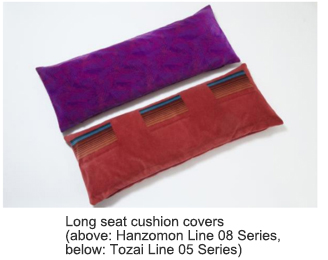
Tokyo Metro launched "Relax at Home with Metro" - upcycled long seat cushions made from actual seats used on the Tozai Line 05 Series and Hanzomon Line 08 Series train cars - for Koto City hometown tax payments.(Both the Tozai Line and Hanzomon Line run through Koto City, making these train cars a familiar presence to Koto residents.)
Train seat covers require regular replacement. As part of our efforts to achieve a decarbonized and sound material-cycle society, we collaborated with a company whose core product is bedding (futons and cushions) to develop upcycled long seat cushions made from seats that had been destined for disposal. This initiative contributes to a reduction of approximately 400kg-CO2 per train set. (Seat cover condition was checked and carefully cleaned by a specialist in Koto City, and then sewn into the most suitable shape for seat cushions.)
To explore the development of attractive products by adding new value to items that would otherwise be discarded, Tokyo Metro launched the Tokyo Metro Upcycling Project, which utilizes materials such as seat fabric from the Marunouchi Line 02 series trains and used uniforms to create a variety of merchandise. We will continue to promote the development of upcycled products, which utilize the original materials to their fullest potential, while working to reduce environmental impact and providing our customers with new value.
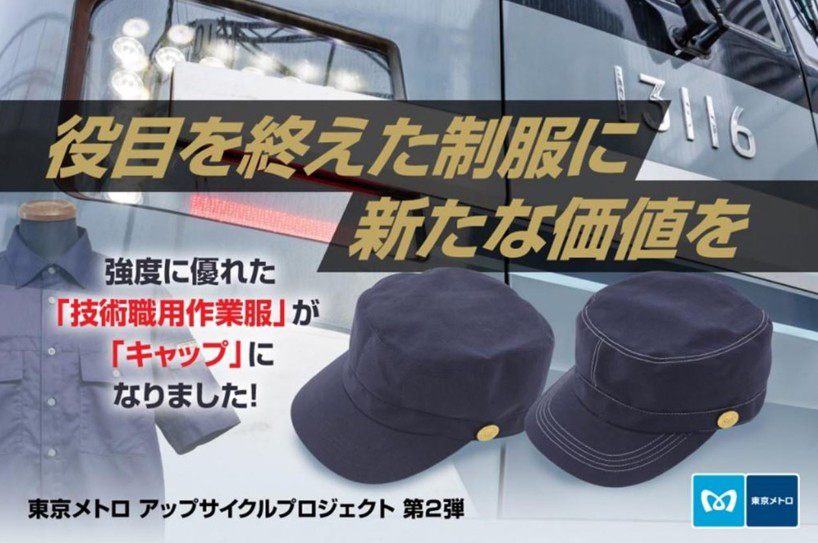
Give new life to used uniforms
Durable technical workwear has been reborn as caps!
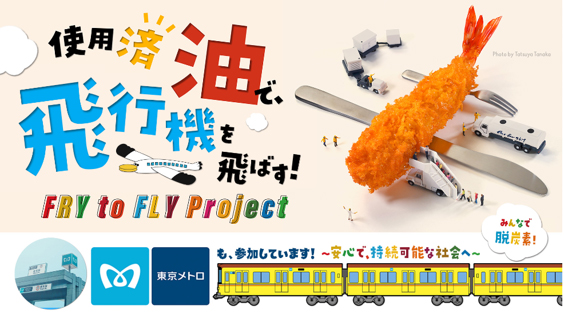
Tokyo Metro supports initiatives to reuse used cooking oil as sustainable aviation fuel (SAF) and other products, as part of its efforts to realize a decarbonized society. The Tokyo Metro Group provides these initiatives with used cooking oil (5,600kg annually) generated by Group company-operated stores, cafeterias, etc. We also participate in the Fry to Fly Project, which aims to realize a carbon-free society through domestic resource recycling, and we disseminate related information via our train-board Tokyo Metro Vision units and other media.
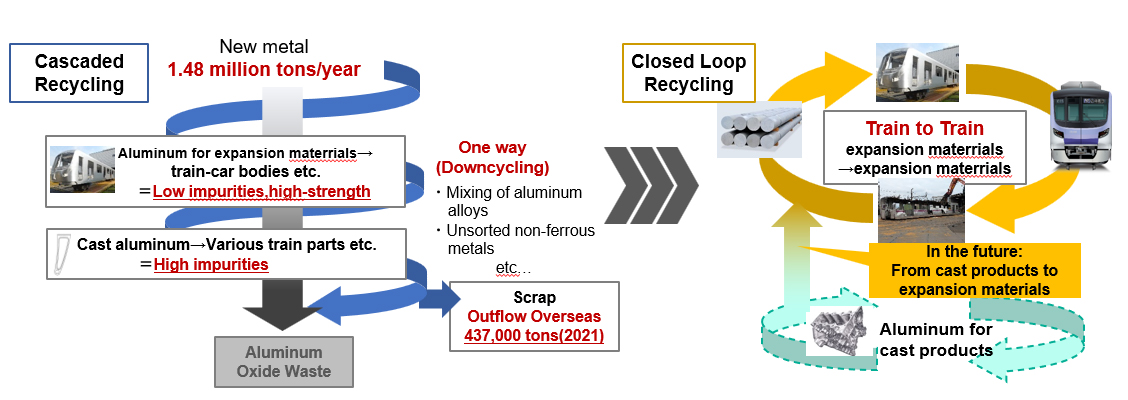
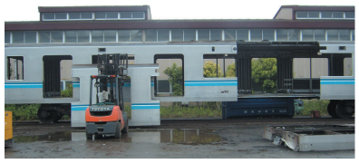
In November 2025, Tokyo Metro Co., Ltd., Metro Sharyo Co., Ltd., Honda Trading Co., Ltd., Nippon General Recycling Co., Ltd., Nikkei Act Co., Ltd., and Suminoe Industry Co., Ltd. jointly achieved aluminum closed-loop recycling* from the Hanzomon Line 8000 series to the Hanzomon Line 18000 series cars. In the "Joint Research on Closed-Loop Recycling of Aluminum Car Bodies" started in FY2024, the bodies of retired Tokyo Metro Hanzomon Line 8000 series cars were sorted by aluminum alloy type into scrap. Without downgrading the material, they were recycled in a closed-loop manner and successfully reused for interior parts of the newly built Hanzomon Line 18000 series. This is the first time aluminum closed-loop recycling has been realized in domestic subway carsvehicles, reducing CO2 emissions by about 8 tons.
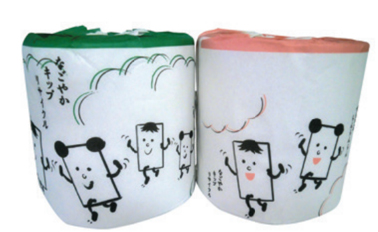
Used paper tickets (such as ordinary tickets) are recycled into products such as toilet paper, and plastic cards (such as magnetic commuter passes) are recycled into solid fuel.
Recycling rate of used train tickets and commuter passes: 100%
The Tokyo Metro Group works to reduce its environmental impact by properly separating and recycling waste generated at stations and construction sites, as well as from decommissioned trains.
Recycling rate of construction by-products: 100%
Recycling and reuse rate of train car bodies: 100%
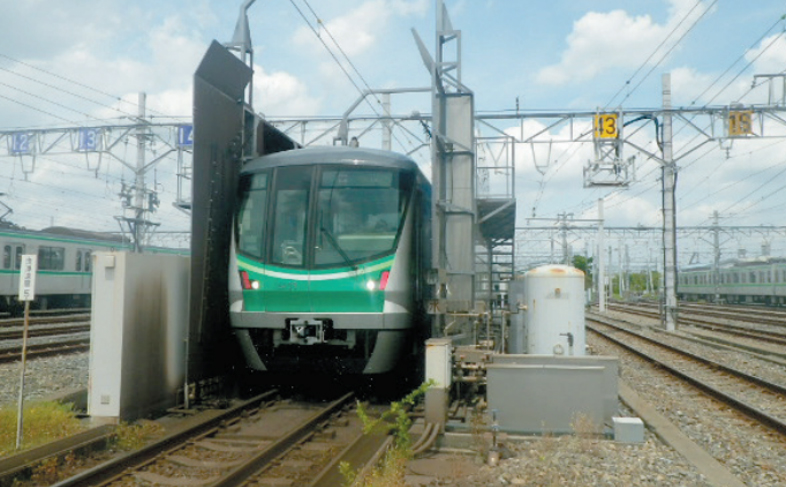
Rate of using of recycled water in automated train washing machines: 81%
Together with local governments and local residents, we work to clean up station premises, entrance buildings, and surrounding areas. We will continue to promote environmental conservation activities in partnership with the communities along railway lines.
In addition, during Environment Month (June) and Food Waste Reduction Month (October) we conduct group-wide awareness-raising activities through email and other means.
In order to realize a sustainable society with peace of mind, we conduct sustainability training for all employees and executive study meetings to raise the awareness of individual employees, who are the main drivers of environmental conservation activities.