
Corporate Information
Service Information
This section provides information about actual or expected delays of 5 minutes or more for train services.
Corporate Information
Service Information
This section provides information about actual or expected delays of 5 minutes or more for train services.
We will promote flexible forms of work so that employees can work with peace of mind suiting their different life stages.
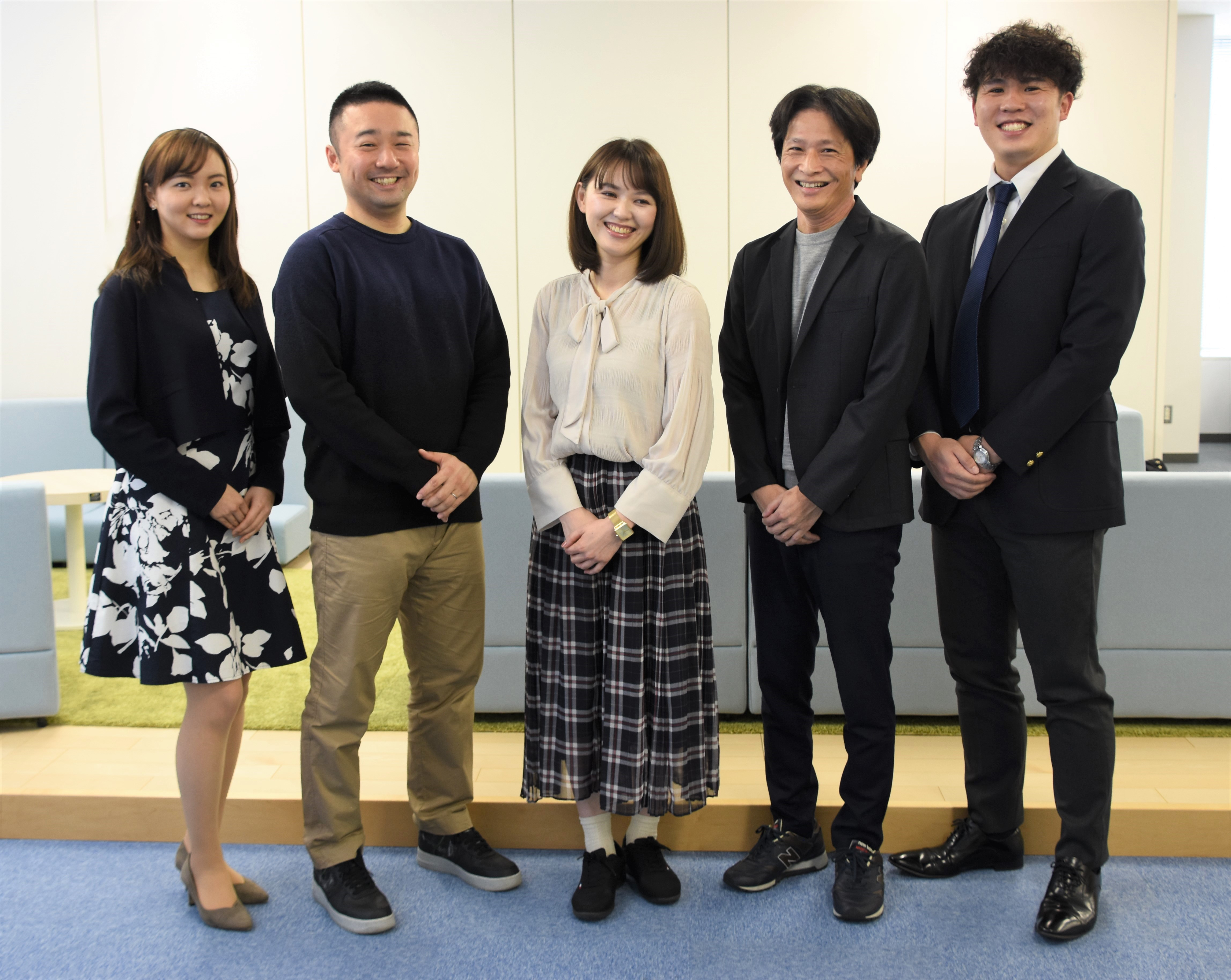
In order to create a comfortable workplace, cultivate a challenging mindset, and promote health management, we introduced dress code reform from November 1, 2020 that provides employees with more flexibility in clothing choice (excluding when wearing uniforms) in accordance with their TPO.

In May 2025, we reviewed the appearance rules for station staff and crew members when wearing uniforms.
The purpose of this review was to create an environment in which employees can work comfortably by enabling them to respond flexibly to the changing times as well as climate change and consequent recent extreme temperature differences. It also aims to abolish gender-based standards, respect the uniqueness of each employee, and make it possible - within the scope of the standards - for employees to choose personal appearance that will engender trust.
* Please see our company news release for more information.
As an initiative to maintain the mental and physical health of employees and to improve work-life balance and productivity, we have introduced an interval system to ensure 11 hours of continuous rest - including overtime - between the end of work one day and the start of work on the following day.
From April 2025, we introduced a flexible working hours system for head office employees that allows employees to set their own starting and finishing times for each working day within the total working hours set for each month. We aim to improve productivity by enabling each employee to work efficiently and effectively.
We have introduced a system allowing employees to take annual paid leave on an hourly basis so they can flexibly take paid leave to suit their individual lifestyles. More than 90% of our employees take annual paid leave every year.
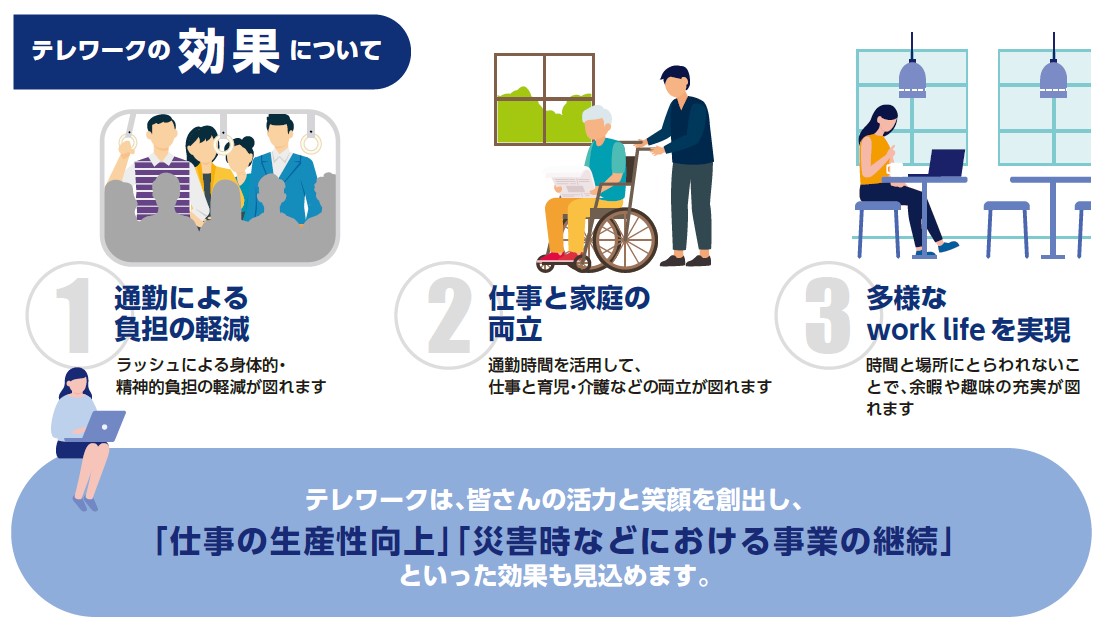
We have introduced a telework system that allows employees (except some field staff) to work flexibly at home, at satellite offices, or on the go. We encourage employees to use this system as an option to create a work style that suits their individual needs.
We have a variety of support systems in place to help employees balance their work and family lives and continue working with a sense of fulfillment and satisfaction. In terms of external evaluation, we have received Kurumin Certification for our formulation and implementation of action plans based on the Act on Advancement of Measures to Support the Development of the Next Generation.
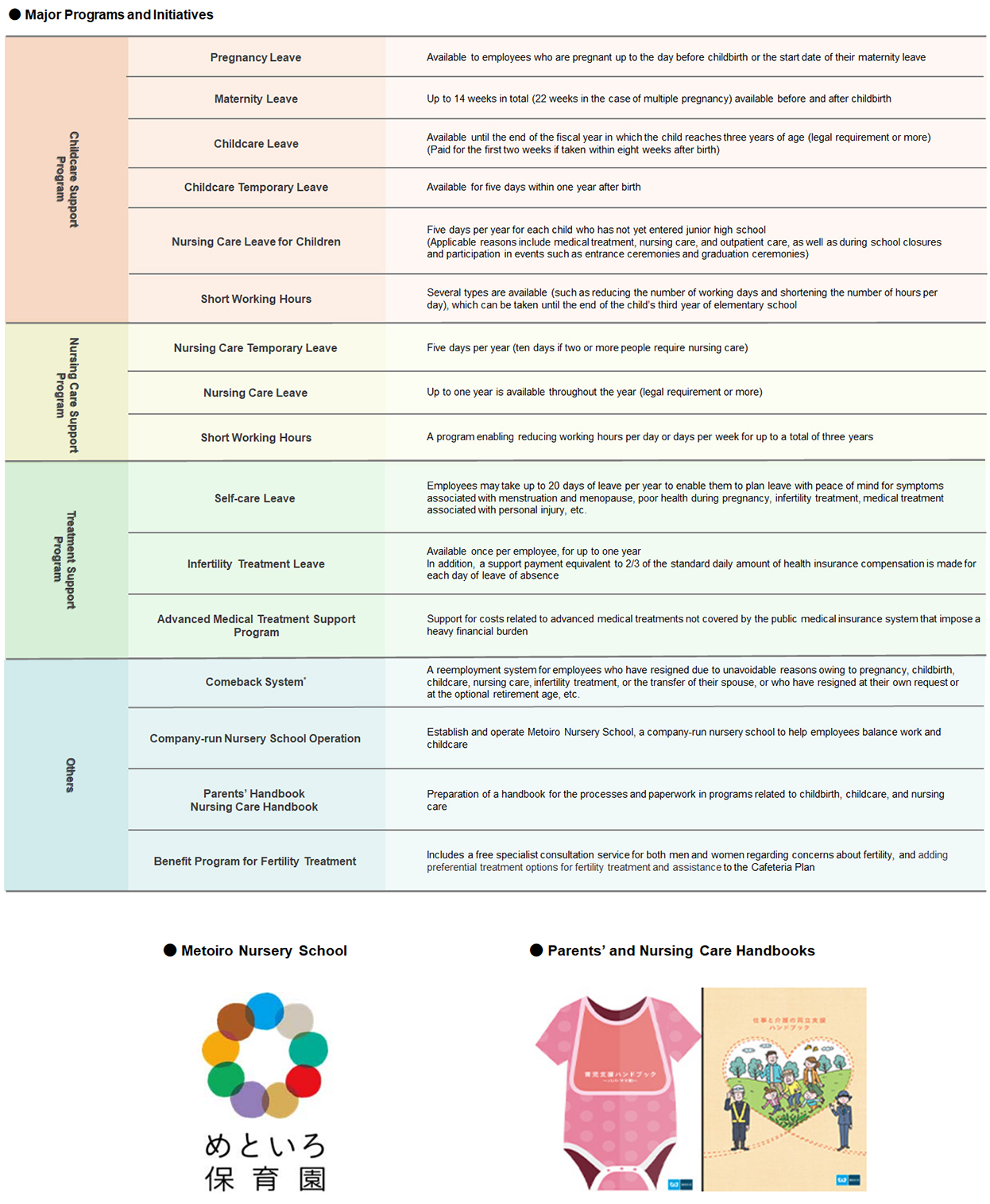
* Please see our recruitment page for more information on the Comeback System.
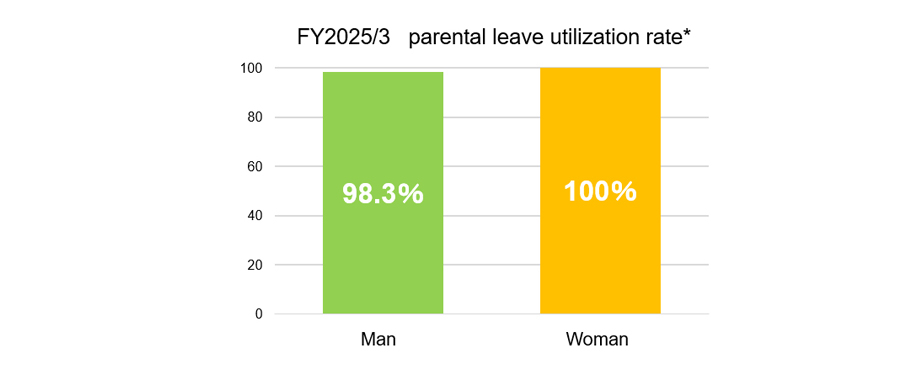
* The percentage of employees taking parental leave at Tokyo Metro is calculated based on the method used to obtain the percentage of employees taking (1) parental leave, etc. excluding the childcare leave system stipulated by the Ministry of Health, Labour and Welfare. In accordance with the amended Child Care and Family Care Leave Act (October 1, 2022) taking effect, Tokyo Metro provides paid leave for the first two weeks of childcare leave (including childcare leave at birth) taken within eight weeks of the birth of a child.
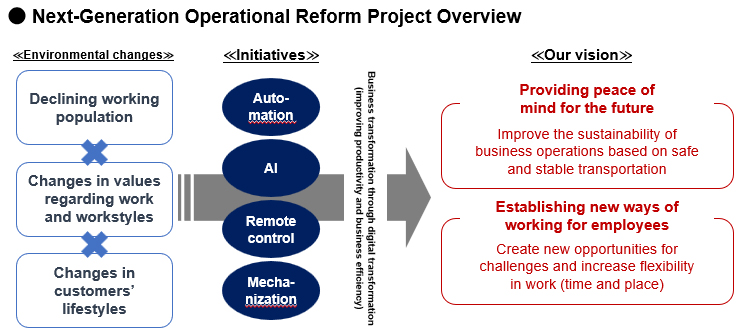
We will implement our Next Generation Operational Reform Project with the aim of providing peace of mind into the future and establishing new ways of working for employees. We will improve the sustainability of our business operations by being aware of the decline in the working population, and changes in values regarding work and workstyles, changes in our customers’ lifestyles, and implementing operational transformation through digital transformation and other such measures.
In order for customers to use Tokyo Metro Group services with peace of mind, it is necessary to create a work environment in which all possible measures for employee safety have been taken. Based on our long-term plans, we aim to create workplace environments where all employees can play an active role over the long term. For example, to ensure the safety and health of our employees and to maintain and improve their working environments, we have established safety and health committees at individual workplaces to survey and discuss the prevention of industrial accidents and illnesses. We are also working on both hard and soft aspects of the working environment to create a comfortable workplace, such as upgrading to high-grade mattresses in sleeping quarters and providing cooling vests as heatstroke countermeasures. Furthermore, we collect and utilize near-miss information to raise safety awareness at Tokyo Metro, Group companies, and our business partners.
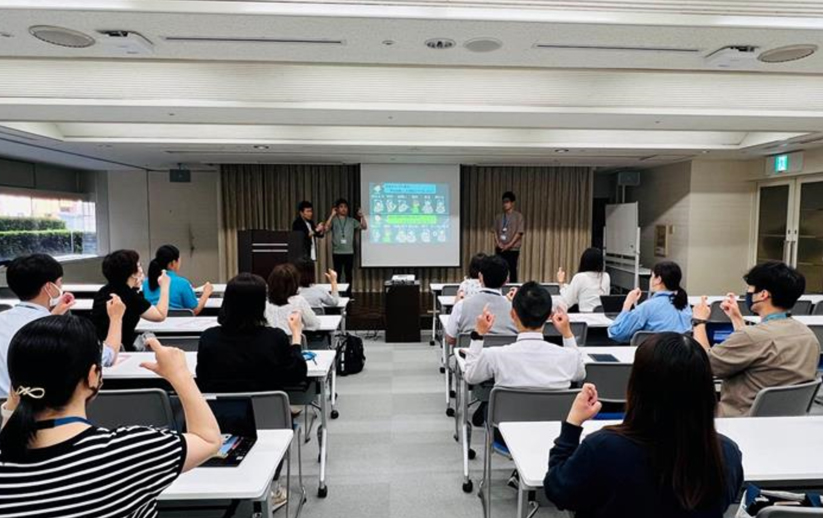
The Tokyo Metro Group, including Tokyo Metro and its special subsidiary Metro Fleur, actively seeks to employ people with disabilities. Employees with disabilities who work at Tokyo Metro's head office not only perform administrative duties such as general affairs, human resources and accounting, but also play an active role across a wide range of situations, including activities to promote understanding of disabilities. By creating opportunities for employees with disabilities to play an active role, we are building a corporate culture in which every employee - regardless of whether or not they have a disability - can make the most of their abilities.
(Photo: In-house optional sign language experience)
We aim to build a corporate culture in which each employee can maximize their capabilities, regardless of their sexual orientation or gender identity. Our initiatives include establishing an external consultation desk dedicated to LGBTQ+ issues, expanding the system for employees with non-legally recognized partners, awareness-raising activities to foster an inclusive corporate culture (such as participating in events run by external organizations and distributing ally merchandise), and sponsorship of external organizations.

On November 14, 2025, Tokyo Metro was awarded Gold - the highest rating - in the PRIDE Index 2025*. Created by the work with Pride Association (wwP), this index evaluates LGBTQ+ initiatives in organizations such as companies, and the Gold rating indicates that we have achieved all five of the certification criteria.
* The PRIDE Index was established in 2016 by the work with Pride Association to create workplaces in Japan where LGBTQ+ and other sexual and gender minorities can work comfortably. It is the first index in Japan to evaluate the efforts of companies and other organizations related to LGBTQ+.
It consists of five indexes: Policy, Representation, Inspiration, Development, and Engagement/Empowerment. If a company or organization meets the specified requirements for each index, points are awarded. Based on its points, a company or organization is certified as Gold, Silver, or Bronze.